



The essential checklist: professional gym flooring for every zone
When planning a gym, equipment decisions get most of the attention. Flooring tends to come later, sometimes too late. But in practice, the floor affects safety, maintenance, member experience and long-term costs just as directly as anything else in the building.
The problem is that professional gym flooring is not one decision. It is several, made zone by zone, based on the activities, loads and other technical requirements each area has to support. This checklist covers what to consider in each of them.
Zone by zone: what to consider
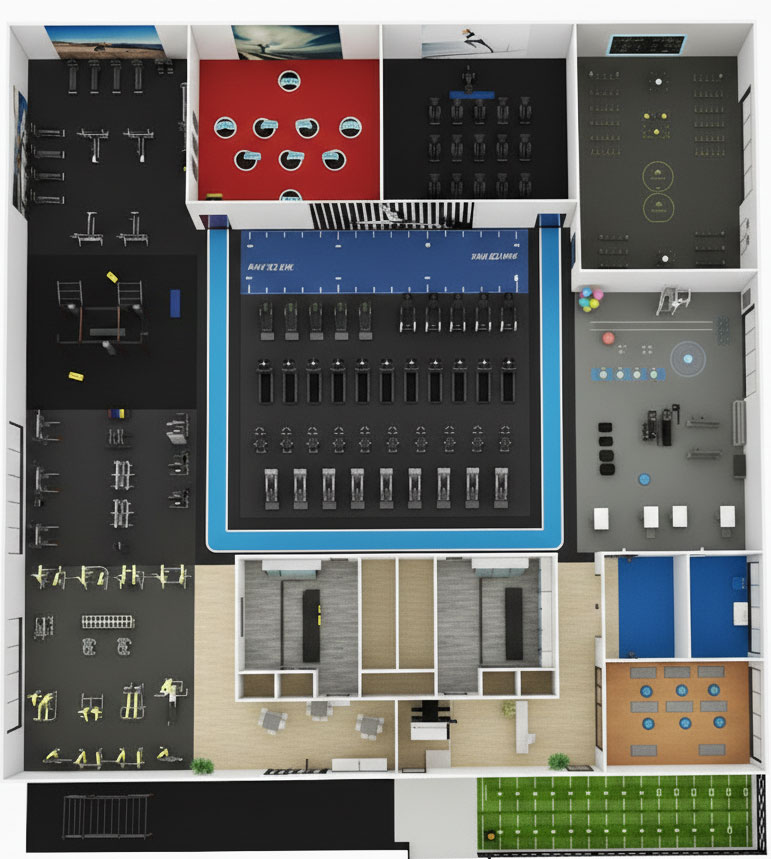
Every gym is different, but most share the same main zones. Understanding what matters more in each of them is the starting point for every flooring decision that comes after.
Group X and studio areas
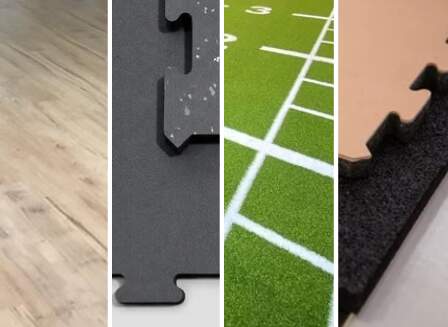
These spaces see a lot of repetitive movement, jumping and lateral changes of direction. The floor needs the right coefficient of friction to provide secure footing during turns while helping prevent excessive joint locking, together with point-elasticity that absorbs impact precisely where it occurs — for example, when landing a jump — and converts it into energy that helps reduce fatigue and physical strain. Motion from Pavigym Prime is built around these principles, with a non-porous virgin rubber surface that is antibacterial, easy to maintain and available in a wide colour range to match the identity of the studio.
Cardio and strength zones
The mix of machines and free movement in these areas creates varied demands: static load from equipment legs, moderate impact from weight drops, and constant footfall throughout the day. Noise and vibration also play an important role, particularly in busy spaces where equipment and repeated impacts can generate vibrations that travel through the floor and cause machines to shift from their position. Density and impact resistance therefore matter more than thickness, while the right level of acoustic and vibration control helps keep equipment stable and the space more comfortable.
For most cardio and strength areas, Endurance and Extreme from Pavigym Prime set the benchmark, virgin rubber with a reinforced coating. For projects where budget efficiency is a priority without stepping down on technical standards.
Free weight and Olympic lifting areas
This is the most technically demanding zone in any commercial gym. Heavy barbells are dropped, loaded and dragged across the surface every session. Three things matter most here:
- Impact absorption. The floor must protect the surface, the subfloor and the structure beneath it. This is essential in areas exposed to repeated impacts, helping to reduce stress, damage and the transmission of impact through the floor.
- Acoustic performance. Dropping a loaded barbell or repeated impacts from heavy weights can generate significant noise and vibration that travels through the floor and building structure. Effective acoustic flooring solution is therefore not only about improving the sound environment within the gym, but also about limiting transmission to neighbouring spaces and other areas of the building.
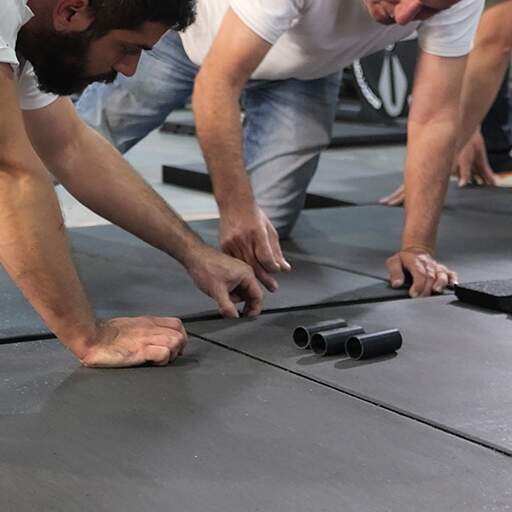
- Replaceability. In areas with this constant level of wear, the ability to replace individual tiles is a practical operational advantage.If a section becomes damaged or worn, it can be replaced locally without removing or disrupting the surrounding floor. This allows maintenance to be carried out quickly, minimising downtime and avoiding the need to close or refurbish the entire area.
Endurance S&S and Extreme S&S from Pavigym Prime address all three, the S&S designation reflects their dual shock and sound attenuation properties. When the project calls for a cost-efficient solution that still meets the technical demands of heavy training, Pavigym Core responds with Solid, Impact S&S and JAG, solutions engineered to handle serious loads without compromising on safety or durability.
Functional training and turf lanes
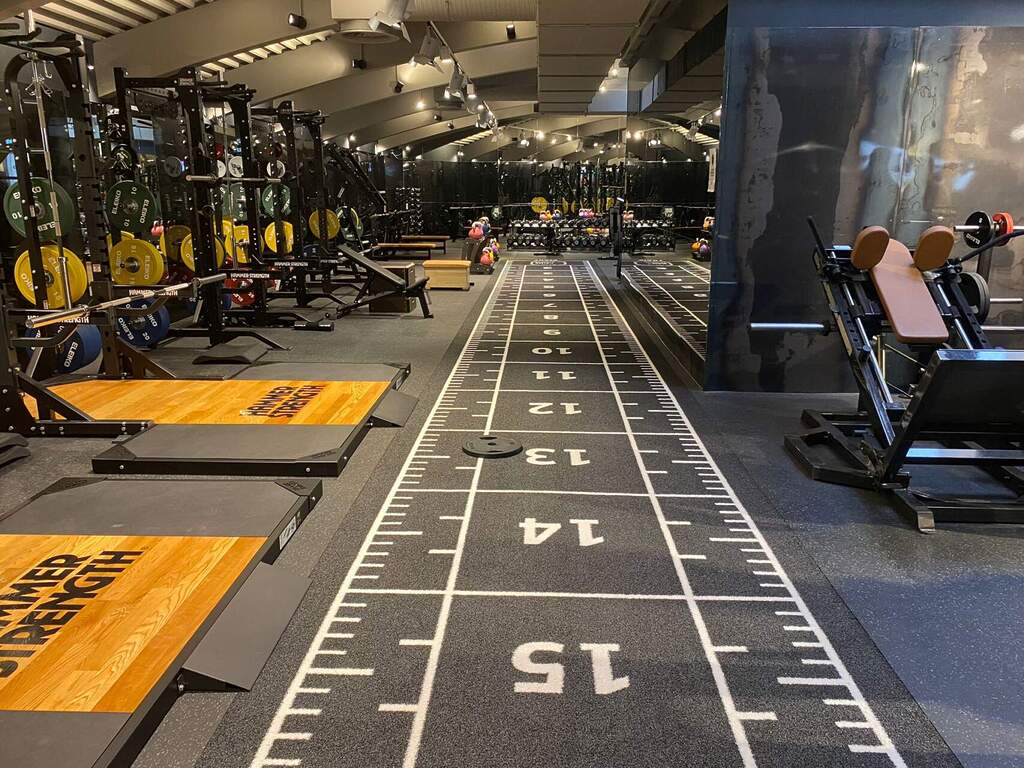
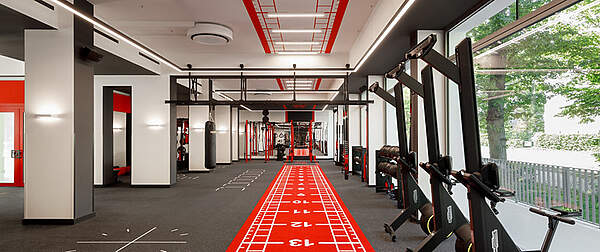
Sled pushes, farmer carries and agility drills create friction and lateral load that most rubber surfaces are not optimised for. Artificial turf handles this better, and it gives these areas a distinct visual identity that reinforces their purpose. Turf from Pavigym Turf is designed for both indoor and outdoor use, with several adaptable versions to suit different spaces and budgets, as well as custom options that allow operators to integrate lane markings or branding directly into the surface.
Corridors, reception and non-technical areas
These areas do not need the technical specification of training zones, but they do need to hold up under constant footfall, trolley wheels and daily cleaning. Pavigym Traffic covers this with Traffic Glued and Traffic Clic, vinyl and PVC solutions designed specifically for high-traffic support areas.
Final thought
Well-specified professional gym flooring is something members never think about, because it simply works. A poorly specified one becomes a visible operational problem within months.