




Functional training: How to design a versatile and efficient gym space
Functional training has become an essential part of modern fitness facilities. By combining strength, mobility, endurance and coordination, it offers a dynamic approach to exercise suitable for all ages and fitness levels. Whether someone is taking their first steps into exercise or looking to improve performance, the functional area offers a place to train. That same versatility makes it a revenue opportunity that facilities should not overlook, through group classes, personal training and specialised programmes.
However, making the most of this potential requires more than installing equipment. Layout, materials and flooring all play an important role in ensuring safety, versatility and long-term performance.
Understanding how these elements work together is the first step towards a functional training space that meets a gym’s current needs and remains adaptable to future demands. The following sections look at each of them in turn.
What is functional training and why include it in your gym?
Functional training focuses on movements that engage multiple muscle groups, such as pushing, pulling, lifting, rotating and changing direction. Unlike exercises targeting isolated muscles, functional workouts develop several physical abilities simultaneously, which makes them easy to adapt to different users and formats, from individual sessions to group training.
For gym operators, incorporating functional training offers both operational and commercial advantadges:
- Greater versatility: One area can accommodate strength circuits, mobility exercises and high-intensity workouts.
- Optimised space: Flexible layouts allow multiple activities without extensive fixed equipment.
- Enhanced member experience: Varied training formats help attract different users and keep workouts supporting long-term member loyalty.
- Additional revenue opportunities: Group classes, small-group sessions, personal training and specialised programmes help turn the area into a profitable part of the business.
Its flexibility also allows facilities to introduce new training programmes without major modifications adapting their offer as member demand evolves.
How to design a functional Training area: Key considerations
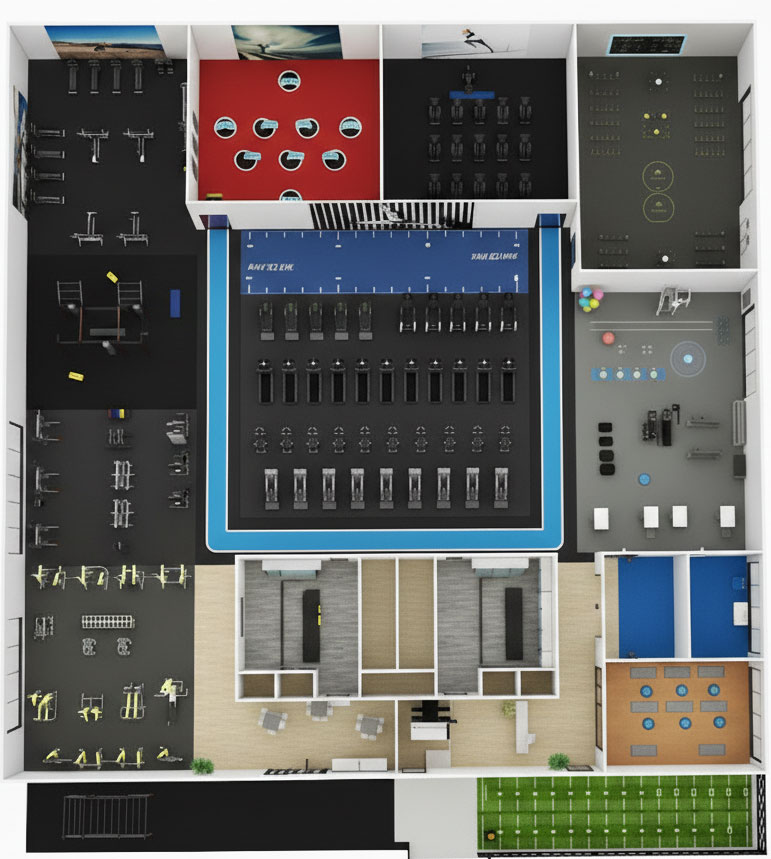
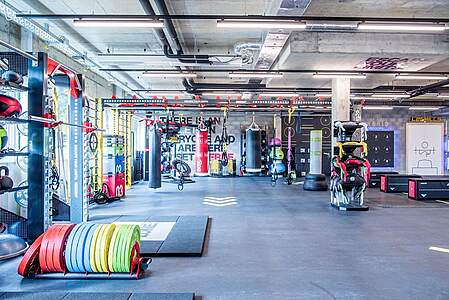
A successful functional gym design balances training capacity, accessibility and user experience. The goal is to create an organised environment where different workouts can take place comfortably and safely and where every square metre contributes to the facility’s offer. The following considerations can help achieve that balance.
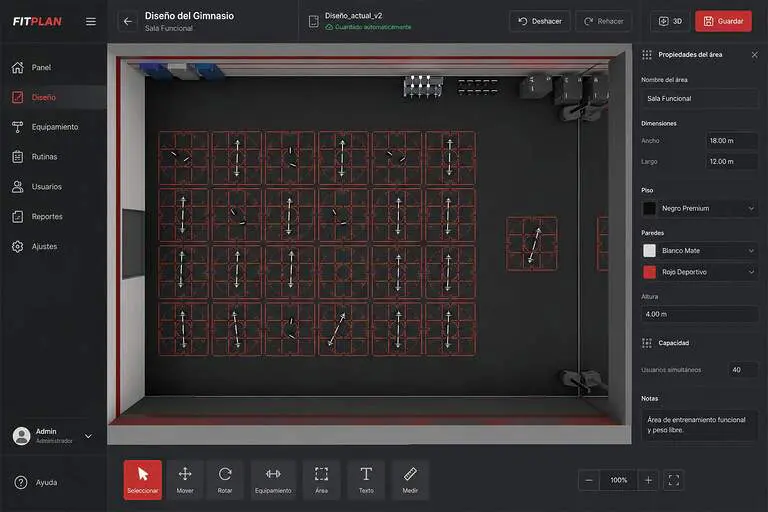
- Make the most fo your available space: Start by considering how many users will train simultaneously and how they will move between stations. Allow sufficient clearance around equipment and keep circulation routes free from obstacles, particularly in areas involving dynamic movements. Planning capacity from the outset also helps define how many people each class or session can accommodate, without compromising safety or comfort.
- Prioritise versatile equipment: Racks, kettlebells, medicine balls and resistance bands are examples of functional gym equipment that support a wide variety of exercises. Choose equipment according to the training formats you plan to offer, prioritising items that can serve more than one purpose. Incorporate accessible storage into the design so that keeping the area organised between sessions is part of the layout, rather than an afterthought.
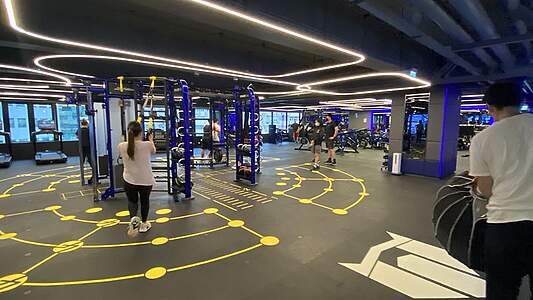
- Consider the training experience: Lighting, ventilation and visual organisation influence how users experience the space. Clear signage and well-defined activity areas help members navigate the gym intuitively, creating a more comfortable and professional environment. Flooring can also contribute to this: colours, textures or markings help define each training zone at a glance and reinforce the identity of the facility.
Flooring: The foundation of a well-designed functional training area
While equipment and layout define how a space is organised, flooring determines how it performs every day. It is what users feel in every lift, jump and change of direction, and what the facility relies on to withstand intensive use over time.
Key considerations include:
- Stability and grip: Helps users maintain control during exercises and changes of direction.
- Impact absorption: Reduces the effects of repeated impacts from weights and training activities.
- Wear resistance: Maintains surface integrity despite intensive use and equipment movement.
- Acoustic performance: Helps reduce impact noise, particularly in facilities with neighbouring or shared spaces.
- Maintenance: Simplifies daily cleaning and maintenance, making facility operations more efficient.
Selecting a suitable floor is not simply about durability. It means balancing these characteristics according to the intensity and demands of the training environment, so users can train with confidence and operators can rely on a surface built to last.
Choosing the right surface for different functional training activities
Once the technical requirements are clear, the next step is to match each surface.
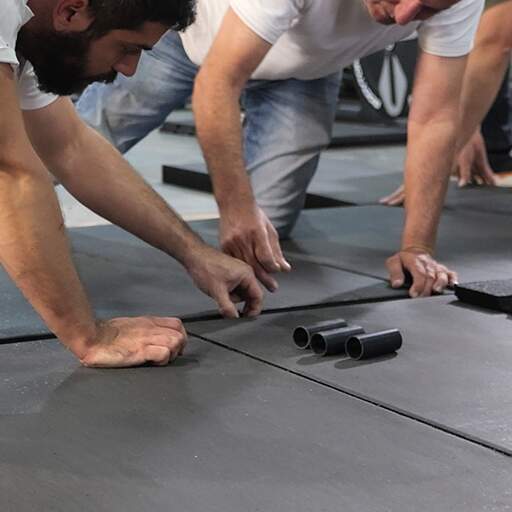
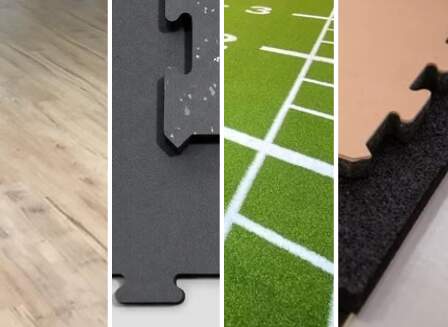
For multipurpose functional areas, where strength exercises, cardio and dynamic movements come together, rubber flooring provides the grip, stability and resistance needed for everyday training. Solutions such as Pavigym Endurance combine these qualities with extensive customisation options and Smart Cleaning system, helping facilities maintain a clean, professional-looking space tat users enjoy training in.
For spaces seeking a bolder aesthetic, Pavigym Extreme delivers the same reliable foundation for demanding workouts, with a distinctive speckled finish that brings an urban character to the training environment.
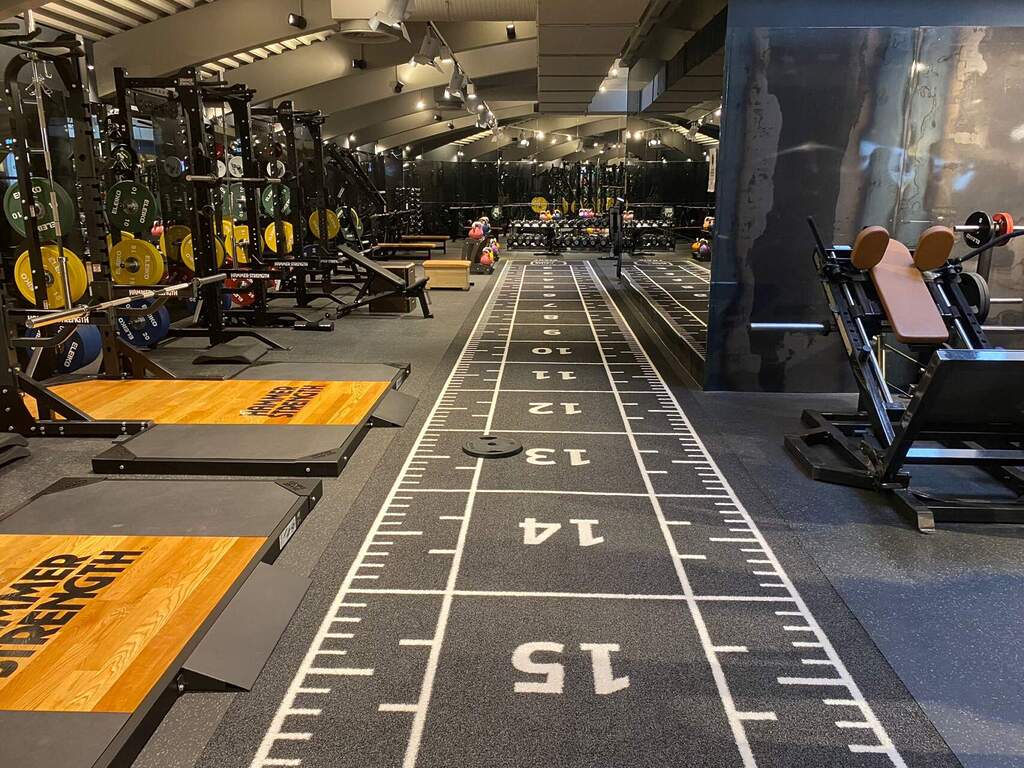
For sled training, sprinting and agility exercises, Pavigym Turf creates a dedicated zone for these activities, with options for training lanes, markings and custom designs.
Combining these surfaces within the same facility enables operators to offer a wider variety of functional training activities and programmes, while giving each training zone a clearly defined purpose and helping users understand where and how to train.
Common mistakes when designing a functional training area
In functional training, much of the work is done with the body itself, so the space and the surface play a decisive role. Certain decisions can limit how well the area performs, both for users and for the facility.
- Overcrowding the area: Adding too much equipment can restrict circulation, limit exercise options and ultimately make the space less functional.
- Choosing unsuitable flooring: Selecting a surface without considering the activities, intensity of use and equipment involved can compromise both the training experience and the long-term performance of the area.
- Ignoring safety distances: Failing to allow sufficient clearance between users, equipment and training stations can create unnecessary risks, particularly during dynamic or high-intensity exercises.
- Overlooking maintenance: A surface may perform well during training but still become a problem if it is difficult to clean or maintain. Consider daily upkeep and long-term appearance as part of the flooring decision from the start.
- Forgetting future needs: Designing only around today’s training programme can limit the space later. Leave room for new activities, equipment and changing user needs without requiring major modifications.
Avoiding these mistakes helps protect the value of the functional space over time, making it easier to adapt as training programmes, equipment and user needs evolve.
Create a training space ready for what’s next
A well-designed functional training area is more than a place to exercise. By combining the right layout, equipment and flooring, it can support different ages, fitness levels and training formats, creating a space that remains relevant as users’ needs evolve.
For operators, that versatility also creates opportunities to expand programming, from group sessions and personal training to more specialised formats, making the functional area a valuable part of both the member experience and the facility’s offering.
Planning a new functional training area or upgrading an existing one?
Discover how Pavigym can help you bring your project to life.